



Question
A friend ignored my advice and fell into the job-offer fallacy. He was so thrilled to get a job offer he wanted that he cancelled two other interviews. I told him to do the interviews anyway. What’s the harm? Well, he never really had a job offer, just a verbal one, nothing in writing. A real offer never came, but they strung him out for almost three weeks. You can guess the rest. The other two opportunities disappeared. He begged for those interviews but the other companies wouldn’t even respond to him. Do your readers a favor and warn them not to put all their eggs in one basket no matter how good it looks!
Nick’s Reply
I think you just gave that excellent warning! But I’ll take this two more steps — and you might be surprised. Your friend had only a verbal offer, nothing in writing. But he should have hedged his bets even if he had the a job offer in writing and even if he started the job.
What is the job-offer fallacy?
 Job hunting produces stress more than almost any other experience. That’s why there’s nothing like the immense relief you feel when the job offer has arrived. Finally, you’re done! Or, are you caught in the job-offer fallacy? It goes like this:
I just got the job offer I want, so I’ll cancel my other interviews. I don’t need them.
The fallacy is that you don’t need them. Never, ever cancel an interview or terminate your job search just because:
- You had a great interview and they said they’d make an offer.
- A company made you an offer in writing.
- You started the new job today.
Here’s why:
A great interview isn’t an offer
After a positive, hopeful interview experience, it’s natural to let your enthusiasm get the better of your common sense. It seems logical to put further job search activities on hold until the employer makes that offer. After all, this is the job you really want! And you’re so busy at work — who’s got time to go on other interviews or to continue contacting more employers? Why not just see what happens with this one first?
Any headhunter will tell you that most good interviews fail to produce job offers. Likewise, more job offers are rejected than accepted. That’s why headhunters (who are responsible to the employers who pay them) always keep other candidates on deck. And that’s why you should never assume an offer is on the way, or that it won’t explode, or that your first day on the new job is the end of it. It’s why you should continue full steam ahead on your job search and keep other irons hot in the fire.
A written offer can be rescinded
An offer is a guarantee of a job, right? Well, not necessarily. Companies don’t always worry about what’s proper or what’s legal. If the company suddenly re-organizes, or its finance department runs the numbers and realizes money is tight, or if the company hears something about you that it doesn’t like, the offer could be rescinded. Even if the offer is legally binding, you could be in for a battle. If you don’t have a fall-back position, you’re without a paycheck.
Here’s an example from the Ask The Headhunter case file. A job candidate fudged past salary on the application form. The employer made an offer, then demanded to see a pay stub from the candidate’s last job. When the numbers didn’t match, the offer was withdrawn. The candidate had already resigned the old job and cancelled other pending interviews, having decided to accept the offer. That was a deadly incorrect assumption.
Day #1 can be your last day, too.
I’ve seen it happen more than once. A new employee finds the job doesn’t really match what what was described, or in a quick re-shuffling is reporting to someone other than the manager who made the hire. Or, the new co-workers are a miserable bunch. Whatever the problem, the new hire decides it was a bad mistake and this isn’t the place to be. The new hire is ready to resign before really starting the job.
Here’s another example from the Ask The Headhunter files. After taking a job and closing the door on other opportunities, the new hire went through two weeks of training only to be told the department was being eliminated. There were two choices: leave, or switch to another department and another job for $20,000 less in salary. Our new hire decided to sue. Three months later, the lawsuit was barely off the ground and our litigant was still without a job and saddled with legal bills.
Beware the job-offer fallacy because it ain’t over till it’s over
Is this likely to happen to you? Probably not. But here’s my rule about taking risks. If the potential for disaster is small but the consequences would be huge (like no job, no income), don’t take the risk.
There is no security inherent in a job offer. If you believe there is, you’ve bought into a fallacy. So, what is a smart job hunter to do?
Until the dust settles, don’t regard an interview, a job offer, or a job itself as the end of your job search. Hedge your bets. Keep your options open until you can take a look around and decide the ground beneath you really is firm. Don’t cancel other interviews. Don’t discourage other offers. The disasters I described don’t happen often. But if such a disaster befalls you just once and you’re without a safety net, it will seem like the end of the world.
Have you ever cancelled a job interview because you were so sure of a “job in the hand” only to encounter the job-offer fallacy? How bad were the consequences? How do you control the risks when pursuing a new job opportunity?
: :

 There has certainly been a lot in the news recently about “cursed NCAs.” And that’s good, because very, very few jobs can justify an NCA. The freedom to have a job of your choosing and to earn a living is fundamental. But employers from fast-food joints to software companies and doctors’ offices routinely require employees to sign these nefarious agreements. That’s changing.
 Hi, Manager,
 The Ask The Headhunter website and weekly newsletter have been on hiatus since the end of April because I couldn’t type. Surgery for a torn rotator cuff (shoulder) will do that — and can take months of physical therapy to recover. (Take good care of your shoulders!) I’m happy to report I’m doing well and recovery is proceeding apace, though it has taken longer than I expected. Thanks for the hundreds of e-mails and well-wishes — and thanks for your patience!
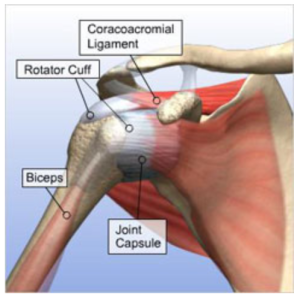 This means my writing arm will be in a sling for about 6 weeks. Writing will be extremely difficult — more likely impossible, according to my surgeon — for part or all of that time.
 Job candidates can flub negotiations if they fail to recognize that there are two components to compensation. There’s money, and there’s everything else. If you ignore that dichotomy and focus primarily on the money, you miss the point of compensation and you might forego a job you really want. Of course, if salary is the key for you, then much of this advice won’t be helpful. But if you’re open to alternatives to salary alone, read on.
 Don’t ask whether you’re a candidate. Tell him that he’s a candidate to be your boss.
 (In this column, I will use ChatGPT as a catch-all term for all generations and competing products of the underlying technology, because this is not an analysis of the technology itself.)
 I’m glad to hear my suggestions helped you win a new job and resign an old one – I love to hear success stories. You’re welcome, and thanks for your very kind words. Congratulations on getting two offers! Nowadays that’s quite an accomplishment.
 When the rules of interviewing don’t work, agile job applicants change the rules. I’ll tell you the story of a job seeker I met during an intense 1-hour